The five eras at a glance
| Act | Year | City | SEGA’s description | Chapter trophies (pre-release) |
|---|---|---|---|---|
| Act 1 | 1915 | Kokura, Fukuoka | A smoke-scorched foundry town, home to what was said to be one of the world’s largest foundries, full of hard-driven workers | Song of the Resurrection · Man’s Heaven |
| Act 2 | 1929 | Kure, Hiroshima | A port town dominated by Japan’s largest naval arsenal and heavily influenced by yakuza organisations | The Way of Evil · The Clown |
| Act 3 | 1943 | Minami, Osaka | The biggest entertainment district in western Japan, set against the rising tension of a world at war | The Patriot · Long Day’s Journey into Night |
| Act 4 | 1951 | Atami, Shizuoka | A bustling seaside getaway synonymous with tourism in postwar Japan | Soldiers’ Pay · Ballads of Spring |
| Act 5 | 1965 | Shinjuku, Tokyo | Japan’s most iconic pleasure district — a city of swirling and unpredictable chaos | A Happy Death |
| Finale | — | — | — | Our Time |
The chapter names come from the pre-release trophy list (PowerPyx, Exophase and VGTimes). The list is not final and can change at launch.
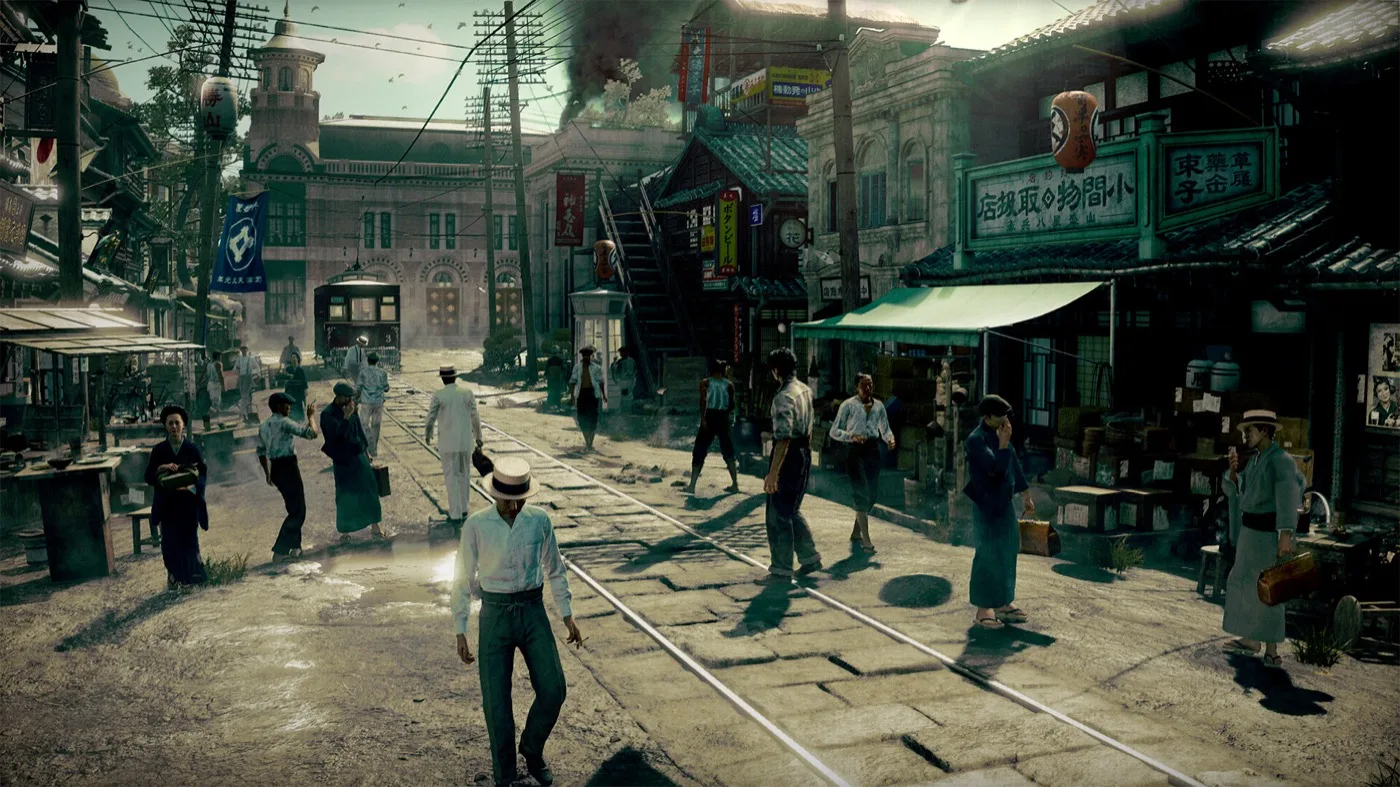
Act 1 — 1915 Kokura
The story opens in San Francisco, 1915, where a young Makoto Daito sneaks aboard a mysterious ship. Born to an American father and a Japanese mother, he has lost both parents and decides to travel to his mother’s homeland.
On the voyage he meets Yu Shinjo, and the merchant Orpheus teaches him how harsh Japan can be. Kokura is a foundry town: SEGA describes it as a smoke-scorched city of hard-driven, fiery workers. The local entertainment is period-specific — drinking, gambling and pleasure buying.
Act 2 — 1929 Kure
Kure is a naval-arsenal port with a heavy yakuza presence. The Act 2: Kure trailer shows the aftermath of an attack on Genzo Iwaki, the patriarch of the Iwaki family. Daito joins the family, receives a ceremonial sake cup and rises through the ranks, becoming known as the “Red Oni.”
This is the act where the yakuza story properly begins: sworn brothers, family politics and the violence that comes with them.
Act 3 — 1943 Minami, Osaka
Osaka’s Minami district is the biggest entertainment district in western Japan, and the country is at war. Keiko Shirai (Ado) is a leading singer in wartime Osaka, which ties the era to the Showbiz system.
Act 4 — 1951 Atami
Atami is a postwar seaside resort built on tourism. After the war, the story turns to reconstruction, entertainment and the kind of money that comes with both.
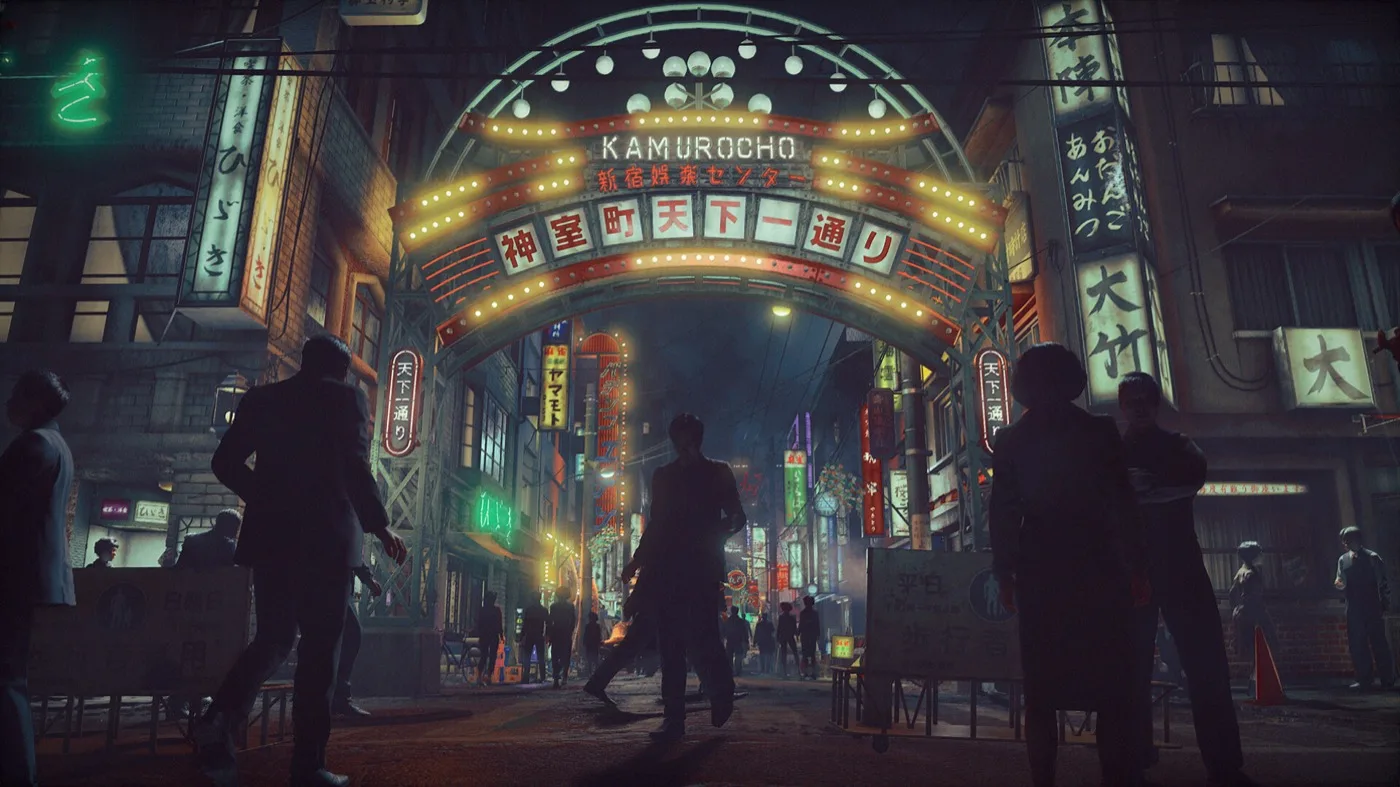
Act 5 — 1965 Shinjuku
The final era is Shinjuku, Tokyo — Kamurocho, the district used throughout the Yakuza series. SEGA calls it Japan’s most iconic pleasure district, “a city of swirling and unpredictable chaos.” This is where the Tojo Clan story reaches its conclusion.
How the acts are structured
Each act has:
- Two numbered chapters (Acts 1–4) or one (Act 5), plus an act-completion trophy.
- A set of substories — the trophy list has one “Fate” trophy per act: Kokura, Kure, Osaka, Atami, Shinjuku.
- A Showbiz story — one trophy per act for completing that act’s Showbiz storyline.
- Era-specific activities — warehouse security in Act 1, street fighting in Act 2, black markets in Act 3, underground fights in Act 4.
That structure matters for completion: the act-specific substories and activities can be missed if you advance the story, so finish them before the point of no return. See the trophy checklist.
What is still unclear
- The exact point of no return in each act.
- How long each act is, and the total playtime.
- Whether you can return to earlier cities after finishing an act.
- The full substory count per act; the trophy list only says “all substories.”